Campaigns
Table of Contents
Lost Mines of Phandelver
- System: DnD (5e)
- Setting: Forgotten Realms
- Role: Player
Lost Mines of Phandelver (LMoP) was our first ever “real” DnD campaign, that is to say my friends, and I’s first experience playing DnD 5e by the rules as written. Previous attempts at playing DnD were short-lived and generally under-pinned by being unable to figure out what any of the rules actually were.
I played Askir, my Dragonborn Barbarian that was dumb as a box of rocks. This campaign was long enough ago that the details mostly allude me, but a few silly moments stick out (vague LMoP spoilers ahead):
- The Jade Frog from the Cragmaw Hideout became a large point of contention after one player asked to keep it for themselves. This will become a running joke.
- The Nothic encounter lead to our first instance of actual party in-fighting and meta gaming. The DM whispered to one player, another player grew upset and suspicious. It culminated with “I cut the rope” and initiative a now long-running inside joke indicating two PCs are about to kill each other. The following session we agreed to reverse time and continue as if it never happened.
- We completely missed Cragmaw Castle and the Black Spider sub-plot, just completely B-Lined for Wave Echo Cave after helping Reidoth. When the Black Spider showed up we were just like “Who?”.
Overall, our first play through of Lost Mines of Phandelver was a bit of a wreck, but an extremely enjoyable one. It created several inside jokes our group has held onto to this day and really got us hooked on DnD. I wouldn’t change it for the world.
Archipelago
- System: DnD (5e)
- Setting: Homebrew
- Role: Player
Our first homebrew campaign, which set the general structure of our campaigns for the next few years, setting up the DM to be the primary DM of the group for the next two campaigns. As we refer to it, the Archipelago campaign, was a sea-faring campaign where we started to really get our foothold with DnD. That isn’t to say it was perfect, we still had our fair share of disasters, especially at the end.
The inciting incident, was a Kraken destroyed the prison transport ship we were all on, for some reason or another, leaving us stranded on an island. From that point onward, we didn’t have a particular goal, I think we just wanted to search for treasure. I played Infir, a chaotic evil High-Elf Rogue, to a surprisingly positive reception from the party and DM.
Just like LMoP, it was long enough ago that the details are fuzzy, but some key moments stick out to me:
- An NPC named Jack Daniels, he ran a distillery and was just the coolest guy ever.
- An encounter turned sour after our party member, William, went down. Azazel, one of our trusted party members, refused to stabilize him, instead famously asking “Is [Player Name] difficult terrain?” The following turn, William was executed by the enemies. To say the table was mad would be an understatement.
- Following the death incident, the party universally, sans one, agreed Azazel had to be executed for his crimes.
Infir was stoked.Plots were made, secret Google Docs were shared, and Azazel was shoved off a cliff-side by Infir, killing him instantly. The player was a good sport about it.
Digging through old Discord messages I found this absolute gem, sent 1-2 sessions before Azazel’s death referring to one of his magic items. I was such a cunt:

- During a petty theft of a map from a local library, gone awry, an extremely frail Tortle librarian was killed. Unbeknownst to the party, this Tortle was in the pocket of the local crime syndicate. Infir was to be persecuted for this crimes by the syndicate via a mandated quest. Instead, the party acquired a large bomb, crafted by the beloved NPC Gigi, and blew up an entire city block. The campaign ended immediately.
The Archipelago campaign was very silly and filled with its fair share of controversies, but it also marked us really getting a rhythm for DnD. Following its end, starting another campaign was an absolute no-brainer, we were hooked.
Hosfen
- System: DnD (5e)
- Setting: Homebrew
- Role: Player
Following the last two campaigns, unsurprisingly, our group was certain that party cohesion was our biggest issue. So, for the next campaign, another homebrew setting, the DM helped us create a group backstory. We settled on an orphanage, which I was actually able to dig up the flavor text for:
The Hosfen Orphanage is a small grouping of houses in the foothills and forests under the World’s Edge mountains. There is one house for each of the permanent residents, one of them being your mentor, [insert pc mentor here]. The exterior of each house is mostly uniform, yet the insides of each are completely different, some being spartan in nature, whilst others are richly decorated. There are stairs that lead up into the mountains, carved from the gray stone that composes the large mountain that looms over the orphanage. A little ways up that stairway is the house of the headmaster, Zhandrin. He has taken no wards, but treats the rest of you equal to the rest. Further, up the stairs still go, but none of you have been allowed up that far, and any time you try to sneak up, Zhandrin always seems to know and catch you. The forest around the orphanage, that you grew up in and played in for most of your life, is protected by a Grey unicorn, among other fey protectors, that keep the forest clean from and outside corruption, and protect you misfits from the humans that would settle this land. This is your home, welcome to the Hosfen Orphanage
For this campaign, I played Grif my Shifter Ranger who was constantly undergoing an identity crisis.
Hosfen marked a substantial improvement in all of our abilities to play a somewhat serious DnD campaign. Everyone made characters they remember fondly, and we maintained party cohesion with intentionality. This is even when the DM started preparing maps using Inkarnate:
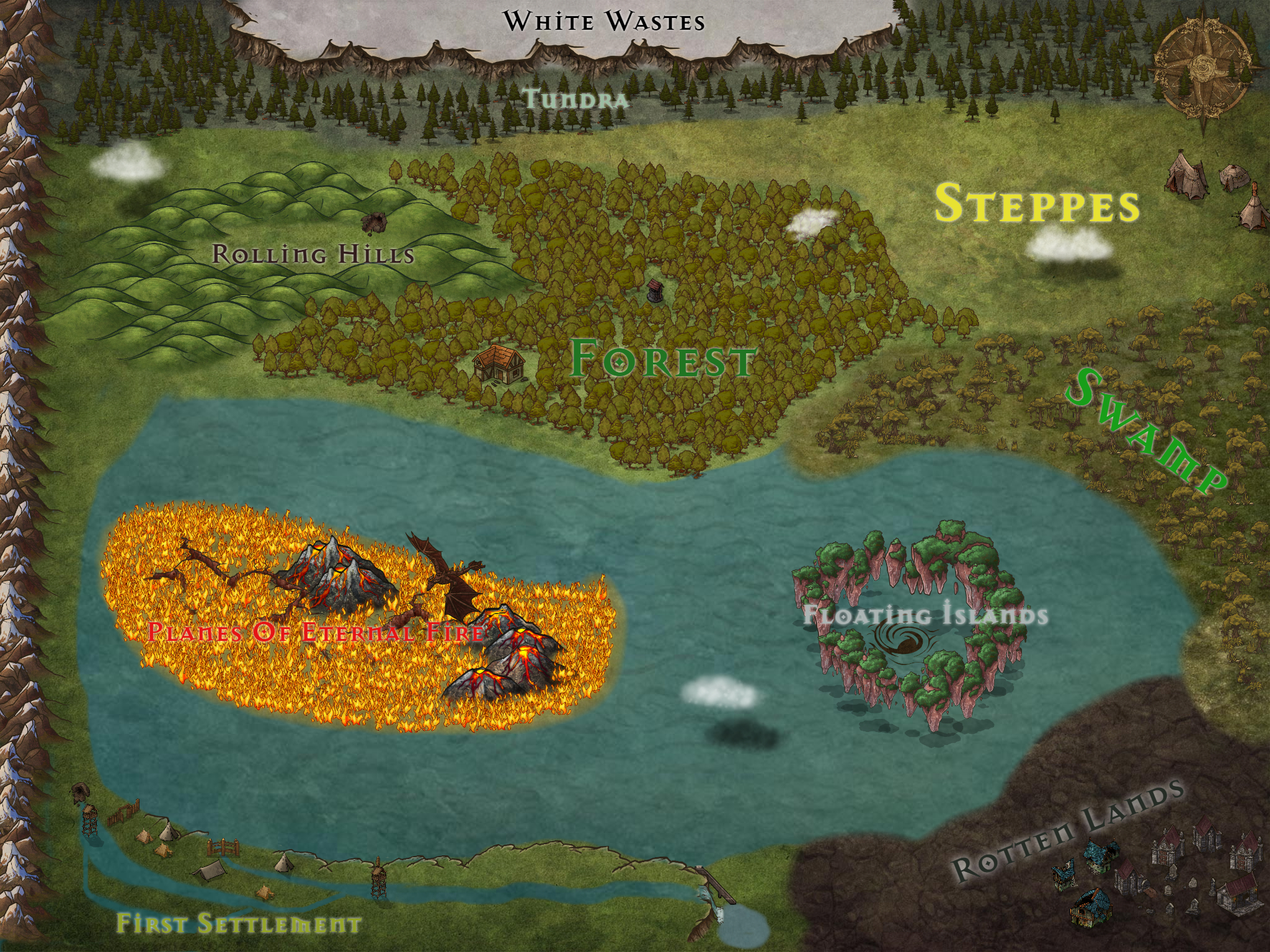
That isn’t to say Hosfen was all sunshine and rainbows however, a few incidents did occur:
- Goodberry was banned, much to the chagrin of our Druid, Fey. Our DM was particularly fond of gritty or survival centered games, we quickly learned 5e was not the best system to support that style of gameplay.
- The injury system. shudders. Our DM wanted to increase the stakes of fighting and taking damage. We all agreed to try out a homebrew injury system. It didn’t turn out well.
This is foreshadowing. - A pleasant werebear NPC who we refused to call by his actual name; to this day I call him Barnaby. Grif was extremely interested in becoming a werebear and repeatedly tried to get Barnaby to bite him.
- The Magic Throne and Magic Ring. I can’t remember all the details, but our party was far too comfortable playing with these extremely powerful magic items that seemed to send you to another plane. One player, sat on the throne and wore the ring at the same time, severing their soul from their body, killing them instantly.
- After wearing the magic ring, Grif met a Tabaxi Sorceror, unbeknownst to Grif the Tabaxi was plotting to, and successfully, possess Grif’s body. The reveal to the party was an extremely memorable moment.
- Ah, the Patented Colville Screw1. Our artificer named Vaughn and another party member hopped in a mine cart we discovered within a dungeon. They proceeded to launch themselves
at mach-5down the tracks using a Thunderstone. The following combat with Hooked Horrors was not pretty and left our Druid with a lot of negative constitution modifiers(injury system cough cough). - Following the hooked horror incident and successfully clearing the path forward in the dungeon, for reasons I can’t fathom, we decided to deliberately turn around and take on the combat portion of a puzzle we already solved. Our druid, who had a majorly reduced constitution due to the aforementioned injury system, proceeded to be killed instantly by an Earth Elemental. Immediately, the party disbanded in horror.
As you can see by the storied interesting moment entries above, Hosfen was a very memorable campaign. I’m a bit remiss that I spent so much of it caught up on my characters class, instead of just enjoying it, but I very glad we played it.
Freeing Ferlen
- System: DnD (5e)
- Setting: Homebrew
- Role: Player
The last of the forever DM trilogy. Freeing Ferlen was another homebrew setting immediately following the unceremonious end of Hosfen. At this point, most of the table of tired of Tier 12 play, except me obviously, so we decided to start at fifth level.
As mentioned in my character entry for Servais, magic was outlawed militantly in this setting, which was a really fun central tension to character create and roleplay around. Now, obligatory setting map below:
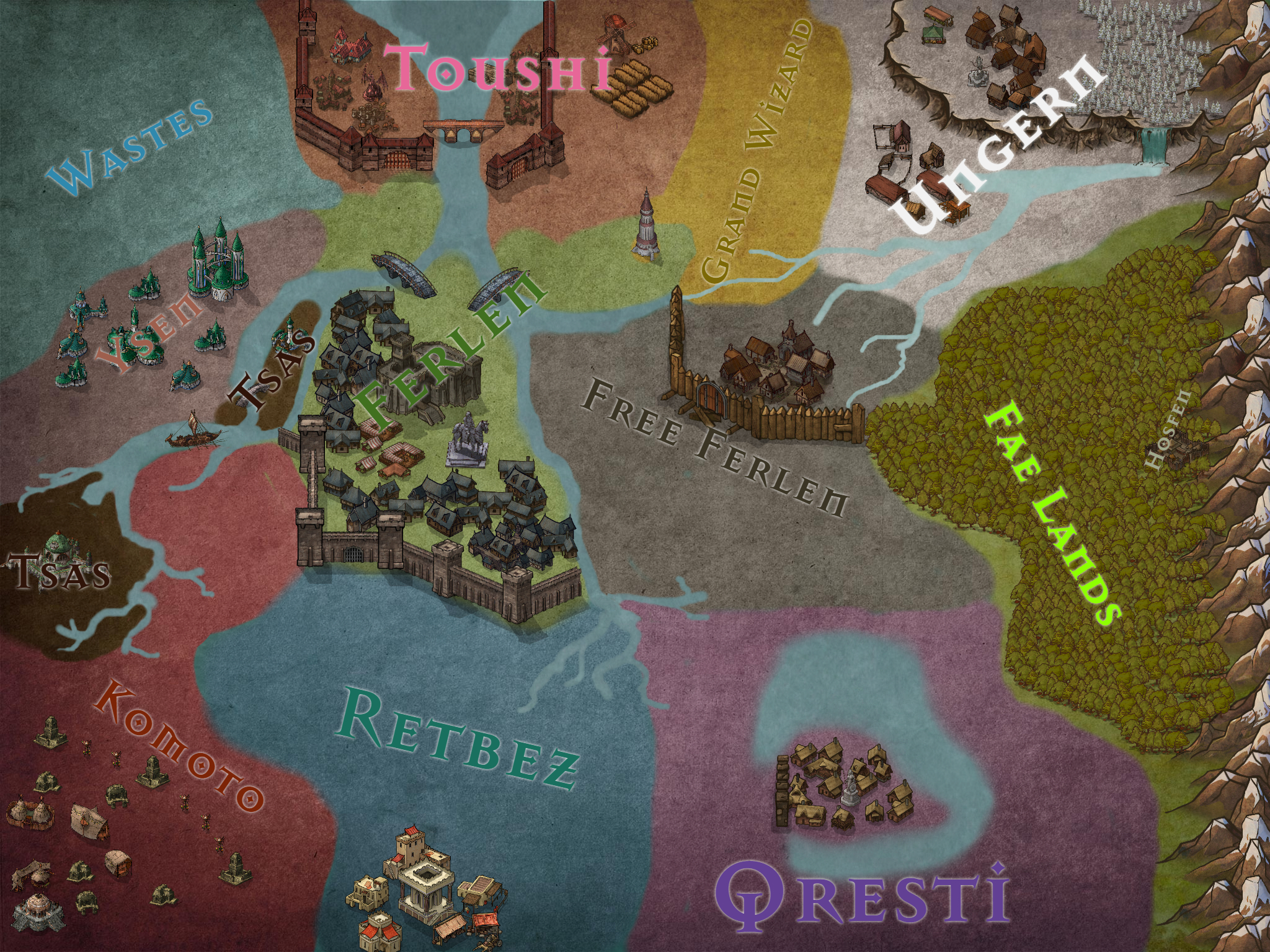
Key moments include:
- Insane No-bark Noonan3-esque NPC was absolutely correct about vampire menace taking over.
- Lawful Stupid Paladin PC charged into evil vampire mansion on horseback.
- After acquiring an Sword of Pestilence from the demonic master of a strange dungeon, the party, in their infinite wisdom, attempted to destroy it by casting it into a major river, poisoning the local water supply…
While the Sword of Pestilence incident is hilarious to look back on, it did unfortunately lead to the anti-climatic fizzling out of the campaign. The baffled DM, who wasn’t too keen on exploring the result of giving several local cities blinding disease, decided to end the campaign.
Overall, other than the silly ending, it was a very run-of-the-mill DnD campaign I have fond memories of. Following Freeing Ferlen, the last of the forever DM trilogy, were several new campaigns cropping up with different DMs in relatively short succession.
Lost Mines of Phandelver
- System: DnD (5e)
- Setting: Forgotten Realms
- Role: Player
The second round of Lost Mines of Phandelver, Lost Mines of Phandelver: The Squeakquel, like all runs of Lost Mines of Phandelver, was a distinct milestone in our group. At the time, we very aptly referred to it as a “victory lap”. Replaying our first campaign with substantially more experience served as a clear demonstration of our improvement as DnD players.
Replaying Phandalin was originally a point of contention, some players being interested in the idea and some players being opposed. Eventually, the most convincing fact was our first run of Lost Mines of Phandelver’s complete avoidance of the Black Spider and Cragmaw Castle. I can say confidentially, I am glad we did.
I of course, played Edward, my, secretly Warforge, Paladin of Helm. Another party member played Bell, an Arcane Trickster originating from my own rendition of a personal favorite one-shot of mine titled: Beneath The Floorboards4. Additionally, we had Agate, an Earth Genasi with total amnesia, a choice informed by the meta context of replaying the adventure, the player hoping total cluelessness would prevent meta-gaming.
Key moments include:
- “Can we overthrow him” - Bell following our first encounter with Harbin Wester, Town master of Phandalin.
- Countless “Oh my god, how did we miss that?” moments throughout the adventure.
- An IRL global pandemic cutting the adventure short.
The unceremonious end of the campaign was brought about by COVID-19, more specifically quarantine preventing us from getting together to play. Unfortunately, I can’t even identify exactly where we left off, it was a complicated time.
Overall, while COVID threw a monkey-wrench into the whole ordeal, our second run of LMoP was an important milestone for us as players and I don’t feel remiss about how it unfolded in the slightest.
Planet B
- System: DnD (5e)
- Setting: Homebrew
- Role: Player
Planet B is definitively the biggest and most important campaign I’ve been a part of. It started in person in 2019 and concluded after quarantine in 2021, taking our characters from level 1 to level 9.
Planet B initially started as a side campaign. It was a smaller group, 3 players and a DM, forking from our ongoing LMoP campaign due to mismatched availability. In fact, the name “Planet B” originates from referring to it as “Campaign B”, on account of it being the secondary campaign. Another important note about Planet B is it also started before and ended after the quarantine resulting from the COVID-19 pandemic. It was arguably my only social activity other than playing video games during quarantine and the learning to play DnD online was a unique experience, to say the least.
The party consisted of Ianmorn, my twink Half-Elf Bard/Warlock, Dew, a bookish Water Genasi Transmutation Wizard with a penitent for ice magic, and, Feltyr, a Eladrin Mastermind Rogue with grandiose plans for world domination (only partially a joke).
We started the campaign in the major city of Khelmsmar, a place somewhat akin to Neverwinter, amidst a political struggle initially unbeknownst to the party. The party was formed due to a shared hatred of an NPC and a desperate need for gold (Ianmorn and Dew we’re trying to pay for college). The first act of the campaign was generally low-stakes, and somewhat fuzzy in my mind, but the conclusion was notable, to say the least. Here’s a map if you’re into that sort of thing:
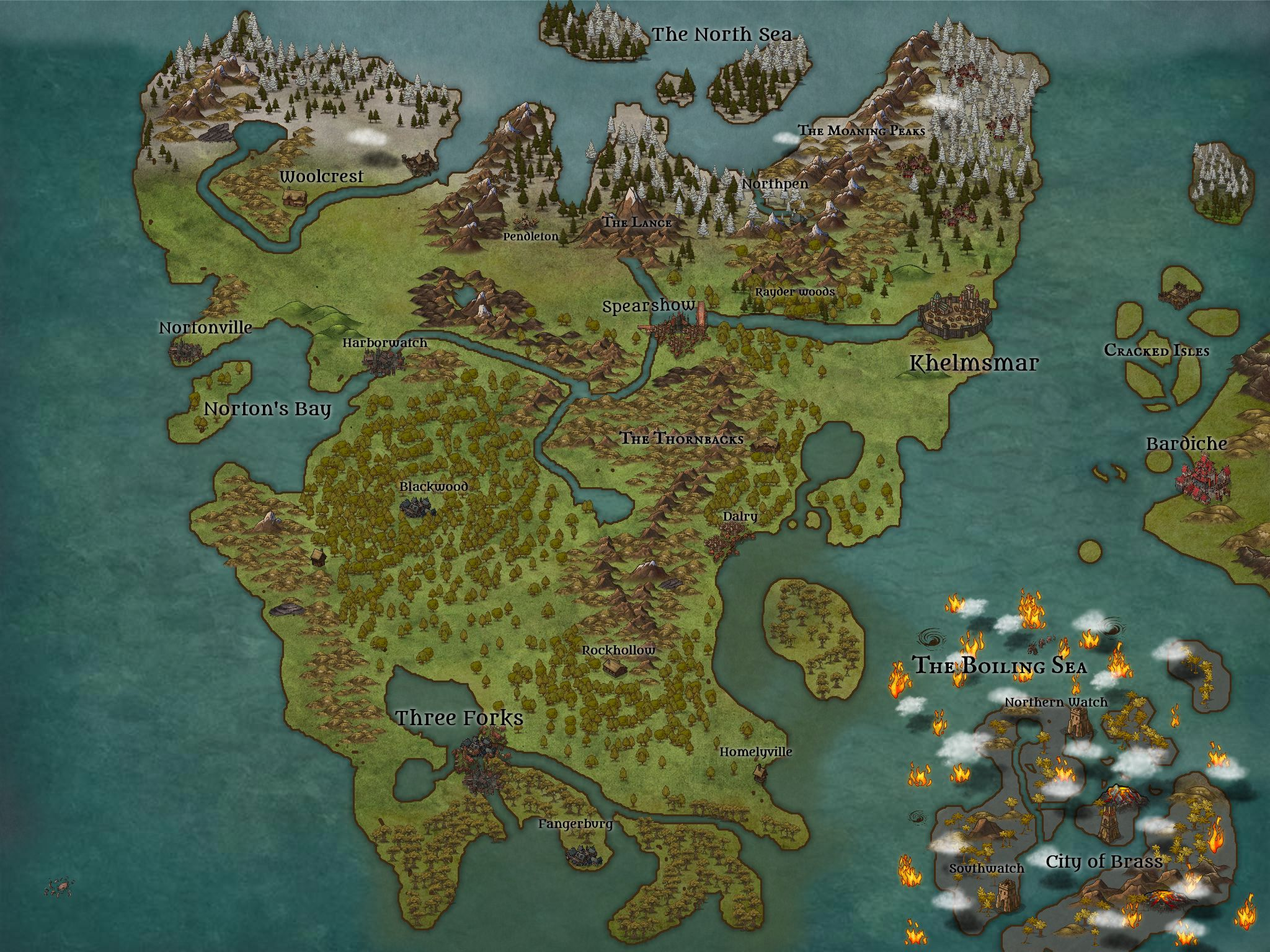
During a night of carousel5, one our favorite things to do, blood began to fall from the sky and across Khelmsmar strange creatures began to emerge: Undead, Monstrosities, etc. It was utter chaos. The party was trying to regroup with our friend, Vergil, a guest PC, who had been arrested earlier in the night due to a bad carousel roll. Simultaneously, Vergil helplessly tried to escape his cell as it slow filled with blood from the rain. Unfortunately, Vergil drowned to death that cell. Following the infamous blood rain incident, we had a year long time-skip and a DnD hiatus as we prepared for act 2 of the adventure.
The kick-off for act 2 nearly just as memorable. During the hiatus, each player received an in-character wax-sealed letter in their IRL mailbox. Ianmorn’s letter was from his father, vaguely alluding to some political conflict his house had been involved in and a request for Ianmorn to leave town with a special family heirloom, a sword. At the time, Maya nor Ianmorn had any idea how important that sword would be. With that and the start of Act 2, the central tension of the campaign began to reveal itself.
For the sake of completing this project in a reasonable time frame, I’m going to refrain from recapping the entire campaign, but there are a few memorable aspects I would like to discuss:
-
Our main tavern and hub during Act 1 was a tavern called “The Good Knight’s Rest” it was operated by Bradly and his animated armor “Greaves” (Fun fact, Greaves was originally named Jeeves, but after Dew’s player made the obvious pun it was changed).
-
During the time skip, each of the players received a variety of unique items, skills, etc. Ianmorn, for instance, received a custom spell and access to Meta magic (Twinned Spell Tasha’s Hideous Laughter was divine.) as a reward for completing college. I always found it to be a really clever idea and considered stealing it for my own campaign.
-
This absolute rat fuck reoccurring villain whose name I refuse to remember, and his stupid griffin drove the party insane. Across several sessions, he would attack or sabotage us from the skys and repeatedly narrowly avoid capture. Killing him brought us no joy or loot, fuck that guy.
-
The small town of Northpen acted as our hub for nearly the entirety of act 2. There was a druid circle, cult, witch of the woods, and a plethora of good side quests. The most memorable NPC to me was the ever endearing Erin, the tavern keep and apprentice wizard receiving lessons from Dew. This also is as good as a time as any for a region map:
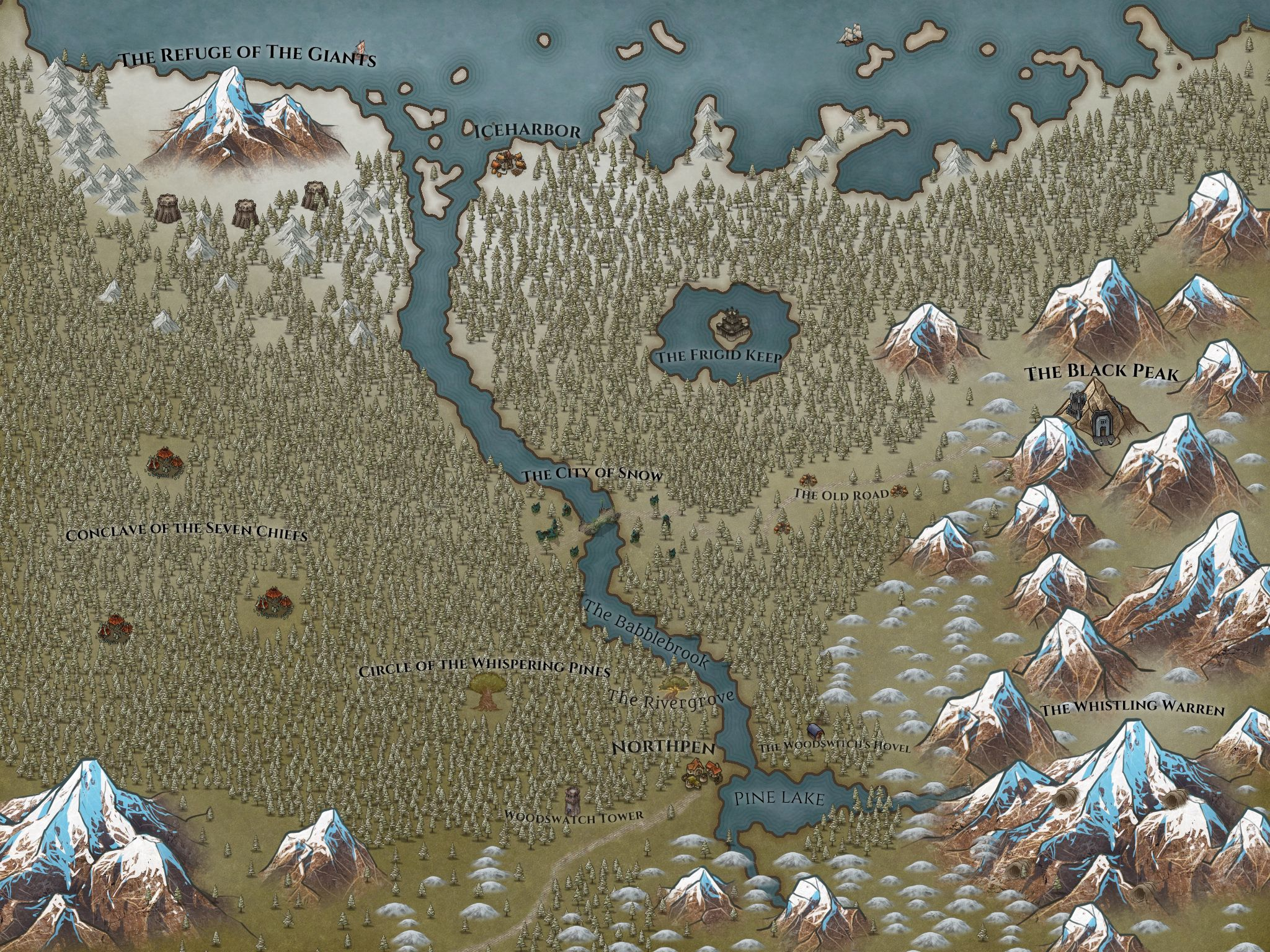
-
Shortly before the end of the campaign, our adventures took us below the surface into the Underdark. This was my first time actually playing in the Underdark, which was a very rewarding experience.
I could go on.
Finally, I couldn’t talk about Planet B without explaining the artifacts and the party in fighting that followed. As alluded to earlier, the start of Act 2 also marked the beginning of the parties’ involvement in the sociopolitical conflict ongoing in Khelmsmars. Essentially, Khelmsmar was founded by a high king wielding three immensely powerful artifacts: the Sword, Crown, and Chest piece. It alludes me if the throne was unclaimed or if the current prince’s rule was under scrutiny, unfortunately the finer details have grown a bit fuzzy, but the writing was on the wall, whoever possessed all three artifacts would rule Khelmsmar and Ianmorn had the Sword.
This was a great main story to follow throughout the campaign, and we ended up claiming 2 of the 3 artifacts before the campaign fizzled out. However, the party’s goals for the artifacts were not in alignment, leading to some of my favorite and most agonizing party in-fighting I’ve experienced in DnD. To summize, Ianmorn wanted to hide the sword, per his father’s request, and Feltyr wanted to gather the artifacts. There was mid-session discord DMs, solo sessions, etc., it was tense. After finally reconciling, for both meta and in-character reasons, the party decided to help Feltyr retrieve the artifacts and take the throne of Khelmsmar. After believing we had realigned on a shared goal, Feltyr slowly began revealing his rule, if it came to pass, would be that of a genocidal tyrant.
I’d like to say that came to some sort of climax or resolution, but unfortunately Planet B just kind of fizzled out. There we’re personal reasons behind the scenes of course, but broadly the motivation to keep playing waned and things sort of just ended. Apologies for the anti-climax.
All in all, it would be impossible to overstate the importance of Planet B. As a DnD player, as a person, and as friends. It was some of the best DnD I’ve ever played in my life, permanently effected my friendships, and I will always look back on it fondly.
Monster Hunter
- System: DnD (5e)
- Setting: Homebrew
- Role: Player
The Monster Hunter campaign was a friend of mine’s first time as a campaign DM. It was also the first COVID campaign that actually started during COVID. We played for nearly a year and managed to complete the campaign from start to end, with only 1 party death. That last line was mostly just a joke, but Monster Hunter was a tough as nails campaign for reasons I’ll get into.
The party consisted of Marino, my very unoptimized Hexblade/Bard chef, our Half-Elf College of Glamour Bard storyteller, and our extremely tanky Armorer Artificer. Additionally, we had an NPC on our ship, a Scout Rogue, Skard, who I often took the reins for in combat. Together we were a band of Monster Hunters apart of a globe spanning Monster Hunting guild. The campaign was mostly sea-faring, a common theme for our group, and typically consisted of sailing between locations with reported monster activity, most typically devils, demons, and monstrosities. The campaign was deliberate straight forward and very fun.
Previously, I alluded to the difficulty of the campaign, specifically in combat, which I want to elaborate more on here. Firstly, some important context is the DM loves throwing powerful monsters at the players way above their level range and tweaking them to make the fight survivable; meaning, for many of us, this was our first time fighting Beholders, Rakshasa, and even the final boss, an Aboleth. This was extremely fun… and terrifying. This DM’ing style played hand-in-hand with another contributing factor, our Artificer was comically overpowered. My memory fails me on the exact details, I couldn’t tell you if they were an Unearthed Arcana, Ebberon, etc., Artificer but result was clear. 22 AC w/ consistent damage output, often avoiding the innate resistances of devils. Assumedly, this was a difficult player to balance around when the other party members had sub-15 AC and the Chef feat.
Key moments include:
- Skard being kidnapped and replaced by a Doppleganger while watching the ship.
- Our bard losing her mind at every single enemy having magic resistance.
- Our DM losing his mind every time an enemy missed our Artificer.
- Marino bearing the inevitable result of the difficulty, dying to a Stone Golem approximately 5 sessions before the end of the campaign.
- Grug, Marino’s successor, heroic sacrificing himself to blow-up the Aboleth at the end of the campaign.
Funnily enough, in my infinite genius Grug, Marino’s successor, was a purely fire based Kobold Sorceror, a build completely unable to do damage to fire immune devils. I have no idea what I was thinking that campaign.
All in all, Monster Hunter was straight forward fun, despite the difficulty. It was rewarding to let someone new take the DM’s seat, and they did a fantastic job with it. It was also one of the few campaigns with a clear planned ending, so I gotta give them props for that.
Sundance
- System: DnD (5e)
- Setting: Homebrew
- Role: Player
Sundance, or as the players often referred to it, Borderlands, immediately followed our short-lived Pathfinder campaign. It was a homebrew setting with an interesting hook: the entire party has been banished to the Borderlands, the other side of a massive wall separating it from the civilized lands. Playing 5e in-person with the same DM was very reminiscent of the forever DM trilogy. It only lasted a few months, unfortunately fizzling out unceremoniously, but it was very memorable and fun.
Initially, I played an Astral Monk named Notus. Notus was very interesting, but for reasons I can’t quite remember didn’t feel right for the party/setting, so he was replaced after the first few sessions, a habit of mine. I’m not sure if I’ll ever write about Notus anywhere else, so why not here:
Notus was a Astral Monk of a cult of hivemind collectivist. Their members all had the same outfit, hair cut, and plain wooden mask. Members of the cult believed themselves to be part of a hivemind, all having the same wants, needs, etc. In roleplay, this was a very fun quirk, especially their use of exclusively plural pronouns to refer to themselves. Notus was exiled to the Borderlands after the cult gained the ire of the kingdom they resided under. The cult was forcibly disbanded in a particularly cruel way; each member of the cult was separated from the others and forced to choose death or exile. Notus, nor I, had any idea what the other members of the cult decided, serving as Notus’ primary anxiety and motivation during the campaign. Notus feared they had made the wrong choice and failed to uphold the tenants of the collective.
Other than Notus’ backstory, my favorite part of playing them was the custom mini I made. Notus visually was heavily inspired by Absolver, a game I’m quite fond of, especially their mask. I did a play through of the game as Notus and I used a program to data mine the stance and outfit they had. Notus also had an astral projection, so I made another mini with an extra torso and arms glued on and painted. I haven’t spoken about it much in this project, but 3d printing my own minis has been a hobby of mine nearly as long as I’ve played DnD, so I find projects involving it quite memorable.
Returning to the campaign itself, following Notus’ departure I played Hasam a Knowledge Cleric that detested the Gods and did not know who granted him his powers. It was a fairly large party, so I struggle to recall all the details
Key moments include:
- The construction of a bridge being a major hurdle for progression. The party decided to settle down and help finish the construction.
- A party member kicking off a war between two factions in the first settlement we discovered.
- Discovering an old tower and activating it’s hidden mechanism, unleashing a horrific monstrosity on the world.
That last key moment was actually the catalyst for the end of the campaign. While exploring an ancient ruin, the party managed to release a borderline apocalyptic monster from its confines. Following the initial encounter and near death, the party could not come to a conclusion on their next course of action, fleeing or remaining in the area, causing an IRL argument on the topic. Trying out Pathfinder had already been an active discussion for some time, so the inevitable new campaign discussions began.
Pathfinder
- System: Pathfinder (1e)
- Setting: Homebrew
- Role: Player
Our first perusal of Pathfinder was heavily encouraged by one of our primary DM’s who, to put it lightly, has very strong feelings about the failings of DnD 5E. The campaign setting, as all good campaign settings are, was a sea-faring archipelago. The campaign didn’t last particularly long, due to the group having friction with Pathfinder, but it still marked an important shift in the way we engaged with DnD.
Pathfinder was a bit overwhelming to say the least, so do not dare ask me the race or class of the party members. I, however, played Caoimhe a “raised by wolves bears” Barbarian who couldn’t speak common. While I loved Caoimhe a lot, I never particularly meshed well with Pathfinder, which was a bit of a surprise to me. I’ve always been a fan of fairly crunchy and mechanic-heavy board/video games, so I expected Pathfinder to appeal to me, but I often found the game complicated in ways that slowed down play, instead of promoting any meaningful ludonarrative-roleplay resonance. Also, the character sheets we’re hideous, don’t @ me.
Key moments include:
I mentioned this in Caoimhe’s character entry, but it was too funny not to recite.While attempting to follow up on a legitimate notice board quest, Caoimhe kicked down a door unknowingly made of glass, resulting in the arrest of her and some party.
Maybe one day I’ll give Pathfinder another try, or write a blog on the topic, but for now it was a fun experience to try but not a system I’m particularly interested in playing more of. When the table’s growing dissatisfaction Pathfinder came to a head, a decision was presented: switch to 5e and continue the campaign or start a new campaign. As usual with our table, we chose the latter.
Du’um
- System: DnD (5e)
- Setting: Homebrew
- Role: DM
Du’um, my beloved.
Du’um marks, in my mind, the most recent era of DnD, where I am mostly a DM. Before Du’um, I had written and ran a few one-shots I was very proud of, but never a full campaign. I had always wanted to run something more substantial, and so in 2020 I began writing Du’um. I soon discovered I was an over-prepper and slow writer and continued working on Du’um until I finally DM’d it in 2022. The initial catalyst for the campaign was a discussion with a friend about boss design in DnD and how to make boss encounters interesting. This lead to the initial drafts of a necromancer boss fight, his tower, and eventually a broader narrative and town his resides in.
As I’ve discussed before, blank canvases can often be a point of fixation and a complete motivation killer for me. In my initial attempts to write Du’um, this manifested as obsession with trying to work my way up chronologically, make a pantheon, etc. Essentially, getting entrenched in the larger cosmology and setting then actually writing the campaign itself. This is not a character trait I’ve overcome in any meaningful capacity, you’ll see that when I talk about my next homebrew campaign, but I managed to skirt by it in Du’um by making a few guidelines:
- Forgotten Realms Setting
- Levels 1 - 5
- Start with a Town
Digging into the meat of writing a small town allowed me a lot of creative choices and the ability to really accentuate my favorite parts of DnD, classical Tier 1 Sword and Sorcery. I’ve always been so fond of the magic and aesthetic of the start of an adventure, my favorite quest will always be helping the tavernkeep with rats in the basement. Additionally, I have always been so enchanted by “stereotypical” DnD aesthetics, especially old-school ones. With Du’um, I really tried to capture all of that, and think I did a pretty good job.
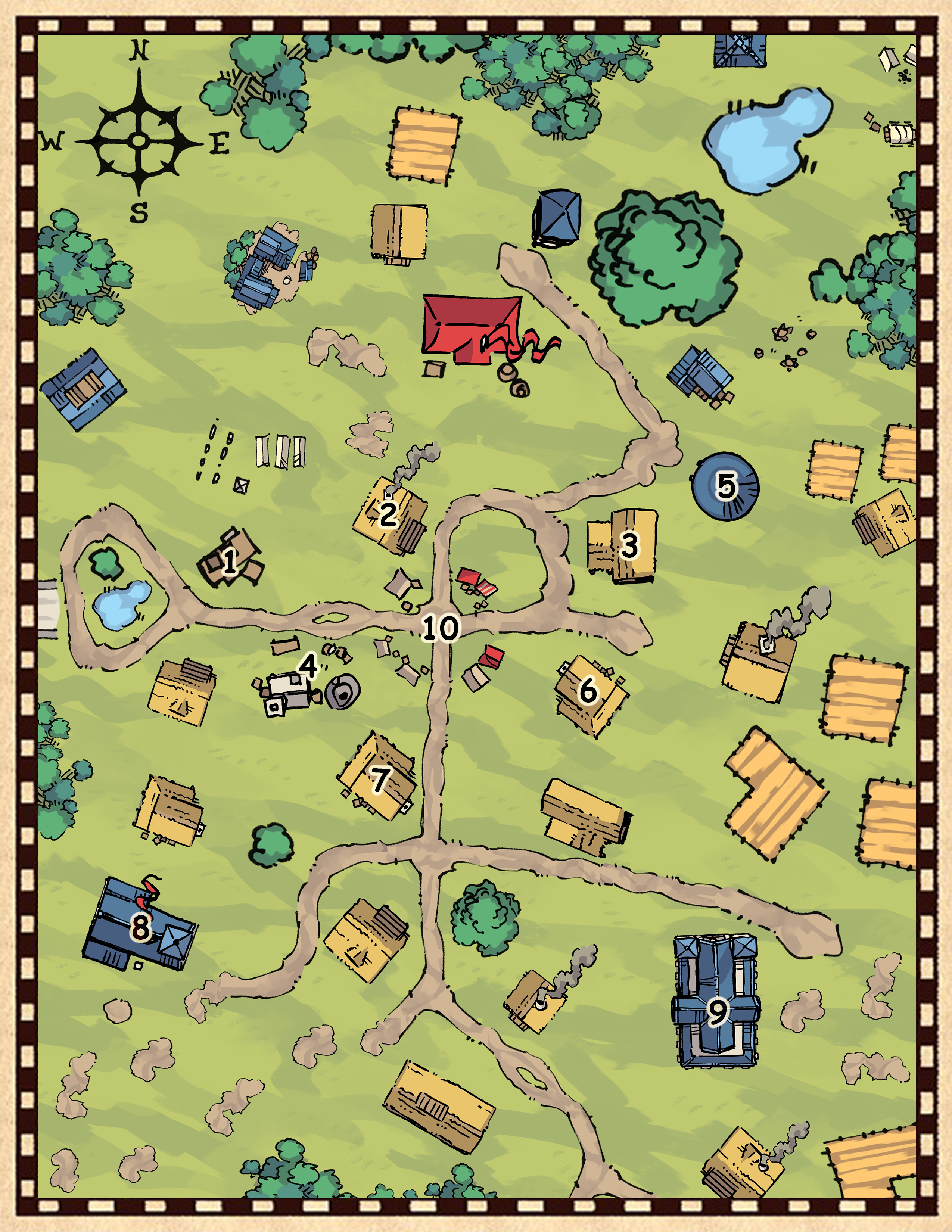
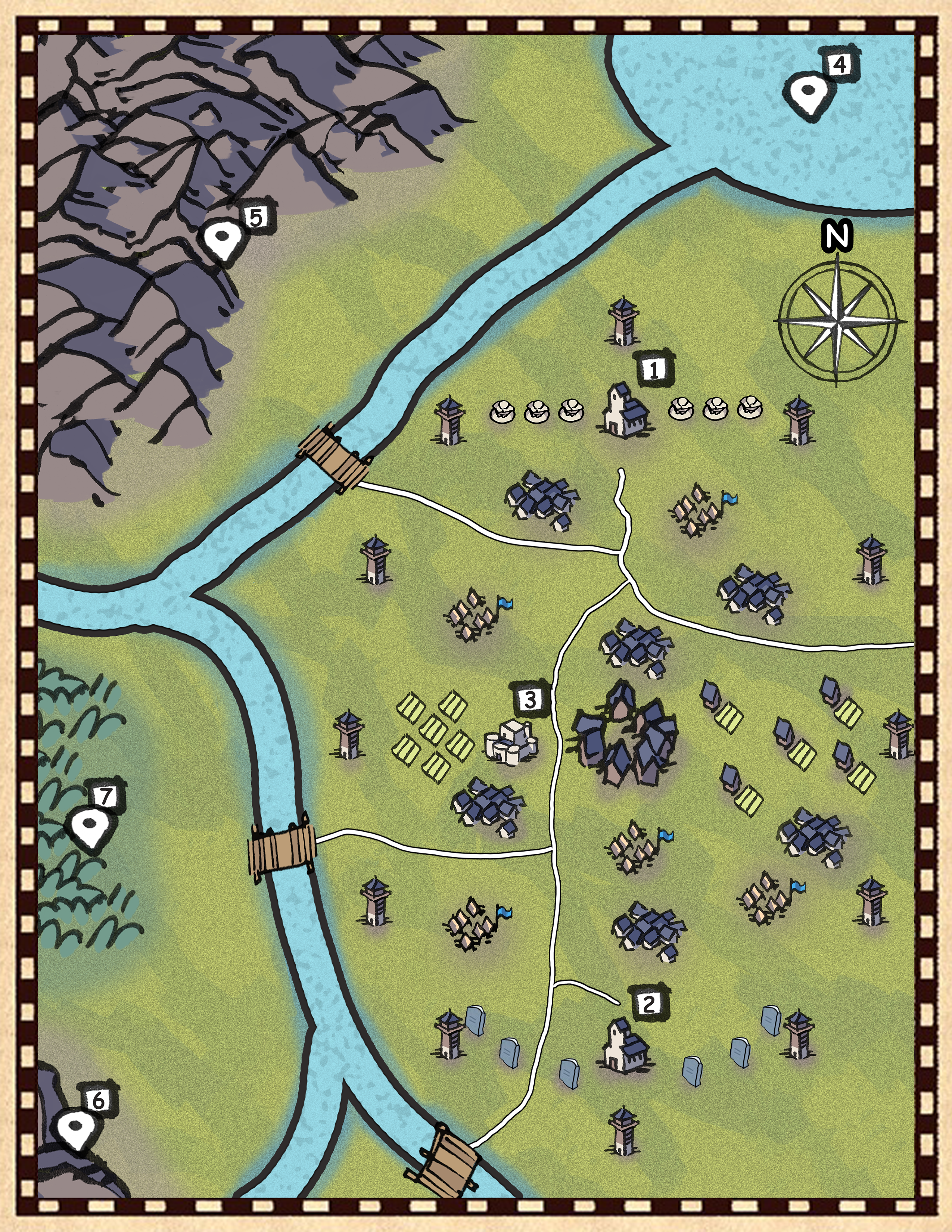
Okay, okay, enough rambling, what is Du’um anyway? Du’um is the campaign title for a level 1-5 adventure taking place in the town of New Du’um, here’s the Plot Hook:
As the morning sun rises, it does little to warm your frigid bones. For it is the 10th of Nightal, the coldest month of the year. Across the Sword Coast, preparations swing into full force, for in a week’s time is the Winter Solstice, marking the festival of Simrill.
Diviner’s prepare their star maps, woodworkers begin carving the likeness of Tymora, and two aristocrats begin sending invitations across the coast. Supposedly, a very new kingdom is throwing quite the jamboree and a large caravan of these invitees has begun to form and begin its journey down the Long Road to New Du’um.
You have found yourself a part of this caravan for one reason or another. Perhaps you are a noble who received their own invitation, or one of the many mercenaries hired to defend the caravan. Maybe you simply snuck into the crowd and tagged along. No matter what, you along with 25 or so others, have begun the 7-day journey to New Du’um.
New Du’um is a fledgling kingdom, approximately 30 years old by the start of the campaign, and is a place rich with history. Being founded on top of a much larger and older kingdom, it is scattered with ruins and artifacts, attracting many adventurers and treasure hunters alike. In fact, the current diarchs have an open bounty on any artifacts from the previous kingdom, further increasing the allure to newcomers. The original Du’um was also a place with rich history, known by most familiar with the area:
The grand kingdom of Du-um was a diarchy led by twin siblings, Ama and Sel. The legends say Ama, the male heir of family Rhannil, was born with an affinity towards the Sun and was thus named after Amaunator, the solar deity. Sel, on the other hand, was the female offspring of Rhannil born with an affinity towards the Moon. Thus, she was named after the Moonmaiden, Selûne. The two siblings embodied their names perfectly. Ama acted with discipline and believed in order. Sel was the embodiment of beauty and grace who idolized love and marriage. The two siblings were, from childhood, inseparable and once the time came for Ama to inherit his father’s throne, he refused. Rather, he only agreed to accept the throne if Sel could rule alongside him. As Ama’s father’s death was swiftly approaching, he had no choice but to begrudgingly agree. The newly formed diarchy led the previous Kingdom into a golden age, and at the beginning of next year the kingdom was renamed Du-um, in honor of the new diarchy. The Kingdom of Du-um went on to live in prosperity for time to come. Although, all good things must come to an end. Thus, Ama and Sel, knowing very well they weren’t immortal, went on to have their own heirs. Ama had a handsome baby boy and named him Silver, in honor of his beloved sister. Sel had a beautiful daughter named Auna, in honor of Ama. The two heirs were believed to be bound together in fate, reinforced by their shared birthday on the Summer Solstice, the 20th of Kythorn.
Here’s a map of the kingdom:
Town Map:
Region Map:
Up until this point in the project, I remained unsure about the exact level of detail I would get into about the campaign setting of Du’um. I considered discussing Auna’s manor, my favorite dungeon, the magic MacGuffin to open Auna’s tomb, or the many other facets of the campaign I’m proud of. However, I’ve decided for the sake of brevity to leave the setting recap here, maybe I’ll dig deeper another time.
Fortunately, Du’um has a lot of meta context that is interesting in its own right. In fact, I actually DM’d Du’um three times in a short period. Two of those parties we’re mini versions of Du’um, as a part of MakeDnD, a DnD themed workshop I hosted at my universities Makerspace6. The third, which this campaign entry primarily refers to, was the full campaign for our usual group of players. Additionally, for the primary play through of Du’um, we had a strict time constraint; we started at the beginning of summer, and our Artificer’s player had to return to college in September. This created a tight schedule, and we adhered to it like clockwork. Honestly, it may have been the most consistent and efficient DnD we’ve ever played.
On account of being the DM and the way I am, I have hella documentation, so meet the Stargazers:
- Cleft, the Eladrin Artificer (Battle Smith)
- Jiomort, the Goblin Ranger (Drakewarden)
- Rafhorn, the Human Paladin (Conquest)
- Sharon, the Shadar Kai Sorceror (Shadow)
- Sylhanna, the Elf Wizard (Divination)
Funny aside on the name Stargazers, granted to the party on Session 1 by Mai, one of the diarchs of New Du’um. A persistent anxiety of mine was our tables lack of creating names for our various parties. I couldn’t tell you why, it just felt like something you’re supposed to do. This led to many a conversation posing potential names to the table, only to be met with denial or cringe. With Du’um, I was the DM, so enjoy your stupid name, Stargazers.
An aspect of Du’um I am particularly proud of, is the Blessings of Simril, unique boons I granted to each player at the start of the campaign during the Simril festival. I won’t list them all out here, but here’s my favorite, granted to Cleft:
Blessing of Abeir
Abeir is the twin planet of Toril located in the same material plane of its sibling world, but within a “pocket dimension” that is out of synchronicity with Toril. Abeir revolves around the same sun as Toril, although from Abeir the sun is seen as blue colored. Abeir shares the lunar satellite Selûne and its Tears with Toril.
Pocket of Spontaneity
You gain a personal connection to an unknown pocket dimension. The pocket dimension appears to have a volume of 100 cubic feet and is unable to hold items exceeding 500 lbs. As an action, you may treat any empty container as if it were the portal to this pocket dimension and draw or store an item. This pocket can only be accessed by your hand.
Gift of Creation
Once per day, as an action, you can channel the magic of the Gift of Creation to create one non-magical item of your choice in an unoccupied space within 10 feet of you. The item must appear on a surface or in a liquid that can support it. The gp value of the item can’t be more than 20 times your level, and the item must be Medium or smaller. The item glimmers softly, and a creature can faintly hear ticking when touching it. The created item disappears after a number of hours equal to your proficiency bonus. For examples of items you can create, see the equipment chapter of the Player’s Handbook.
The size of the item you can create with this feature increases by one size category when you reach 6th level (Large) and 14th level (Huge).
Once you have used the Gift of Creation, you can’t use it again until at least 24 hours have passed, and you have spent 2 hours watching and contemplating your constellation. This counts as light activity for the purpose of a long rest
Each player was granted a similar boon, tailored to their character, and I intentionally paid little mind to imagining the theoretical havoc these abilities would have on the campaign. Other characters were granted things such as an at will 30ft Identify, the ability to take on the ailments of another, etc.. I was never punished for this, the players enjoyed the unique upgrade, and they were moderately relevant throughout the campaign.
All of this to say, the first full play through of Du’um ran like clockwork. The players hit all the major beats, explored all the dungeons, and defeated the final boss. The Epilogue was delivered before Cleft’s player went back to college, and we all went home happy. To say I felt like my preparation paid off, would be an understatement. In the process I also discovered I loved DM’ing, specifically the aspect of always being engaged no matter the situation. Sometimes, as a player, a scene simply isn’t for you or combat drags on a bit too long, and it’s easy to become disengaged. Not as DM, there is nary a moment of respite and I love it. Admittedly, I still prefer being a player, it scratches a particular itch for me, but DM’ing is also fun. Fortunately for me, Du’um kicked off my DM streak.
Overall, Du’um is an extremely important campaign to me, probably more so than my players. I worked on it for years, overcame a lot of my bugaboos about DM’ing, and experienced a lot of pride when it paid off. I still work on Du’um to this day, tweaking things here or there, and more recently taking it from the Forgotten Realms and beginning to integrate it into my own setting. I will never forget this particular campaign and I will now always have my own take on Lost Mines of Phandelver to present to any new group of players I come across. I’m really proud of myself for this one.
Lost Mines of Phandelver
- System: DnD (5e)
- Setting: Homebrew
- Role: DM
Lost Mines of Phandelver round 3 baby!
This time we’re talking a whole new cast of players,except one.
All of them new to the game, except one.
All new campaign. Okay, that’s just straight up a lie.
…
The third play through of Lost Mines of Phandelver was the result of the creation of a new friend group at university, mostly originating from the on-campus Makerspace. Obviously, I held no illusions about my interest in DnD. In fact, many of the players, who would go on to be in this campaign, played in my MakeDnD workshop mini campaign. Having already played a scaled down version of Du’um, the choice to run Lost Mine of Phandelver was obvious.
Once again, Maya DM, so you’re getting a player list from my campaign notes:
- Artemis, the Human Fighter (Arcane Archer)
- Armenius Maximus IV, the Water Genasi Monk
- Dra’zakar, the Tabaxi Rogue (Arcane Trickster)
- Faccanoth, the
BlueDragonborn Sorceror (Draconic) / Warlock (Hexblade) - Wrafaeth, the
GoldDragonborn Cleric (Life) - Zug-Zug, the Kobold Artificer (Alchemist)
Jeez, that was a big table.
So new players, my second time DM’ing a campaign, and a 6 player table, it went exactly how you’d expect. Amazingly! Just like Du’um, this campaign ran from beginning to end smoothly, they hit all the major plot points, and the table was excited to start a new campaign. Unfortunately, a new campaign never panned out, but our time in Phandalin was a blast nonetheless.
Key moments include:
- Prior to the campaign, Armenius Maximus IV players asked me if he could be a Red Water Genasi. I refused, citing his refusal to give a reason why and there being no cannonical examples in the Forgotten Realms. Everybody disliked that. I was bullied into allowing him to play a Red Water Genasi. I justified it to myself after reading lore on the Red Tide7.
- Armenius Maximus IV entering a room full of stealthed bugbears, seeing them, and closing the door. The party demanded to know what’s in the room, he simply shrugged and said “You don’t want to go in there.” They went in there.
- The curse of the Jade Frog continues. Artemis and Wrafaeth become locked in a campaign long rivalry after Artemis trys to claim the frog as her own.
- After claiming Glassstaff’s Glassstaff, Faccanoth decides he wanted to use it as a melee weapon. At the suggestion of the DM,
(heh heh heh)he multiclassed into Hexblade to do so.
The third round of Lost Mines of Phandelver was a resounding success. I found the book easy to run, the players had a great time, and time in Phandalin is always good. Not to brag or anything, but I’m kinda 2 for 2 on finishing campaigns.
Birth of Lords
- System: DnD (5e)
- Setting: Homebrew
- Role: Player
Birth of Lords is my current main DnD campaign of which I am a player. It’s an entirely homebrew setting and the players are mostly the usual cast, with some new faces. In my mind, it roughly marks era 4, the current era of our time playing DnD. That is to say, we’ve all grown and changed a lot, which extends to how we play DnD. We all have full time jobs, we’re substantially more mature, and, we’ve lost a few folks. Things happen, friendships fizzle out, life gets in the way, etc.. Which is okay, but there is substantially less of the original cast at the table these days. It’s hard not to feel bittersweet.
Sorry to get sappy for a moment.
As for the party, this one’s fresh on the mind so I should nail it. If you’re in Birth of Lords and I got your subclass wrong, nu-uh.:
- Eva, the Dwarf Cleric (Life)
- Flux, the Water Genasi Monk (Four Elements)
- Neevrie, the Orc Barbarian (Beserker)
- One-Grit, the Warforged Fighter (Rune Knight)
(He thinks he is so funny)
And of course, I played the ever fabulous and graceful Rhys, the Tiefling Satyr Warlock (Archfey) / Bard.
The campaign began with our group of adventures setting off from the hamlet of Stillwater, across the sea to save captives of a recent bandit attack. This has led the party to the Gnomish city of Oncambhoolp. Don’t even fucking ask how to pronounce it. Our arrival, a few side quests, and the acquisition of the Warforged One-Grit later, we found ourselves in combat with a group of pirate slavers, touting high-tech weapons suspiciously similar to the bandits we are hunting. Unfortunately, once the dust settled down the law got involved, and they did not look kindly on our extrajudicial killing of the bandits. Even though they enslaved our friend and smelled bad and… ACAB Given the choice of labor or death, we fled the city. With that, we are back on the road, headed to the suspected base of the strange metal-stealing bandits we are searching for.
Key moments:
- Did I mention Rhys eldritch blasted a child?
And… that’s it. We are now up-to-date on Birth of Lords. It would be a bit difficult to write any concluding thoughts about a campaign that’s young and ongoing. The party is great, the setting is good, and I’m having a blast. Here’s to many more.
As Above, Night Below
- System: DnD (5e)
- Setting: Homebrew
- Role: DM
As Above, Night Below is my current main DnD campaign of which I am the DM. More specifically, we are running “Night Below”, a TSR published 2e ADnD adventure (I even bought the original box set, I’m so stoked), adapted into 5e and my homebrew setting currently referred to as Dekádium.
It’s been difficult to find a spot for it in this project, maybe I’ll make it its own project entry, but I’ve been working on a fully homebrew campaign setting for some time now. It takes place in the realm of Dekádium, with additional writing focus on the cosmology, chronology, and the broader world building. In fact, we played 2 sessions of my own Bygone Valley, a region of Dekádium, campaign with another group, before shelving it due to life getting in the way. There’s even a sprawling magnificent Obsidian vault that causes the reader to zero-sum akin to the Oghma Infinium 8
How does this relate to Night Below? Well, the “As Above” portion of course. A delightful discovery while preparing for this campaign was Night Below’s thematic alignment with Dekádium, leading me to integrating it into my setting.I could write an entire Imprimatura-style blog about writing for DnD and the decision to integrate an existing module into my own. I have countless conflicting thoughts about creativity, art, and hobbies, creating a set of unfollowable heuristics leaving me stun-locked. Fortunately, As Above, Night Below has become a very rare “just right” choice, that I’m very happy with.
Here’s the party:
- Aegir, the Human Warlock (Depths)
- Citella, the Half Elf Monk (
Cobalt SoulVelvet Fang) - Morgan, the High Elf Rogue (Swashbuckler)
- Tokhus, the Lizardfolk Paladin (Watchers)
- and sometimes Freya, the Eladrin Ranger (Beast Master)
So far, the party has shipwrecked on the island of Haranshire, where they have been roped into the search for Jaleneth, a wizard’s apprentice. Lingering threads have pulled them towards Broken Spire Keep and its vile priest patron, Ranchefus. Having secured the aid of the local rangers and the Wild Woman of the Woods, the party prepares to launch their assault on the keep, unknowing of what lies within. Or, to those of you familiar with Night Below, they are preparing for the Broken Spire Keep dungeon and the subsequent end of Book 1.
On the DM’s side, running Haranshire has been a very enjoyable time. Self-contained, tier 1, and sewn with the seeds of a bigger mystery, what’s not to love. I am also an absolute sucker for old-school ADnD aesthetics, which Night Below is obviously chock-full of. Oh, and so many handouts. I fucking love handouts. Additionally, the changes I’ve made for my setting have not gone unnoticed, and make the process of running a pre-written adventure substantially more engaging than my previous experiences.
All in all, As Above, Night Below is a campaign still in its early stages, but it has the capacity to be just as memorable as all the other campaigns. I’m enjoying it a lot, and I take it my players have been as well. I’m excited to see what the future holds for it.
Lost Mines of Phandelver
- System: DnD (5e)
- Setting: Homebrew
- Role: DM
We are literally so back.
You know, it’s metaphysically pleasant, although not surprising that the last campaign on this list is also the first. (Ignore this if I ever add additional entries.) Just like last time, all new-ish players, except 1, she’s on round 4 of Phandalin. It’s a very small table of people close to me, so it’s been absolutely unsurprising that it’s been consistently very enjoyable.
Here’s the party:
- Bell, the Halfling Rogue
- Kau, the Tabaxi Bard
- Llewynn, the Aracrockra Barbarian
You know the drill, Goblin Ambush, Phandalin, Ruffians, yadda yadda. The players have just finished clearing out the Red Brand Ruffian hideout and are preparing to set out on a variety of side-quests you gather around Phandalin. Textbook stuff.
By far, the most endearing aspect of the campaign is the roleplay among the party. Bell is comically childlike, Llewynn is hard-ass, and Kau is an anxious mess. Almost every interaction is Bell brain scrambling the party, Llewynn hiding her endearment, and Kau scrambling off to snuggle with Sildar. It’s perfect.
Interestingly, you may recognize Bell from another campaign entry on this list, Lost Mines of Phandelver.
Not to be confused with Lost Mines of Phandelver, Lost Mines of Phandelver, or Lost Mines of Phandelver.That is in fact the same Bell. Bell is a reoccurring character in Maya one-shots/campaigns, she’s deeply childlike, speaks with an UwU voice, and has a Jackalope familiar named Kitty. She’s perfect.
Overall, this run of Phandalin has been pretty textbook so far, and enjoyable as always. It’s been made even better by the people I get play it with. I love them all a lot, and so I especially love this campaign. Maybe I’ll have them experience Du’um, or better yet the Bygone Valley, someday.
Footnotes:
-
A term coined by Matt Colville referring to players finding themselves deep within a dungeon and having bypassed most encounters, usually by sneaking, leading every enemy in the dungeon to collapse on them. ↩
-
A term outlined in the 5e Dungeon Master’s Guide referring to the early levels of DnD defined as Levels 1-4: Local Heroes ↩
-
No-bark Noonan is a Fallout New Vegas NPC who is obviously insane. Paradoxically, he is also completely right and explains just about every quest in Novac. https://fallout.wiki/wiki/No-bark_Noonan ↩
-
https://www.dmsguild.com/en/product/204277/beneath-the-floorboards ↩
-
Carousal has been a bit of a running gag at our table for years. We’ve been in the habit of using the Bigger, Badder, Longer, Uncut d100 Carousing Table for nearly as long as we’ve played DnD. Imagine our surprise when it led to a fucking character death. ↩
-
A portion of the Elemental Plane of Water turned hazardous and red by algae: https://forgottenrealms.fandom.com/wiki/Elemental_Plane_of_Water#cite_ref-MotP3e-79_37-0 ↩
-
https://en.uesp.net/wiki/Skyrim:Oghma_Infinium ↩